become a launching partner NL

for home batteries and energy storage/

Software for home batteries, from the meter cupboard to the yearly check.

Fikst is the system for your whole installation business, including when you fit home batteries. For each address you keep track of what you install, what the grid operator wants to know and when you come back.

In the Netherlands, net metering (the salderingsregeling) ends on 1 January 2027. If you also install heat pumps, air conditioning or solar panels, they sit in the same file.

You pay per office user and your technicians are free. You pay for the implementation once.

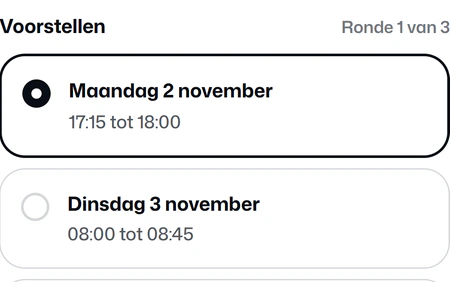
Scheduling maintenance in the customer portal (Dutch screen): which days suit you best, with Monday to Friday and Saturday as a spare day, three proposals in round 1 of 3 with Monday 2 November from 17:15 to 18:00 chosen, and the button Book Monday 2 November.
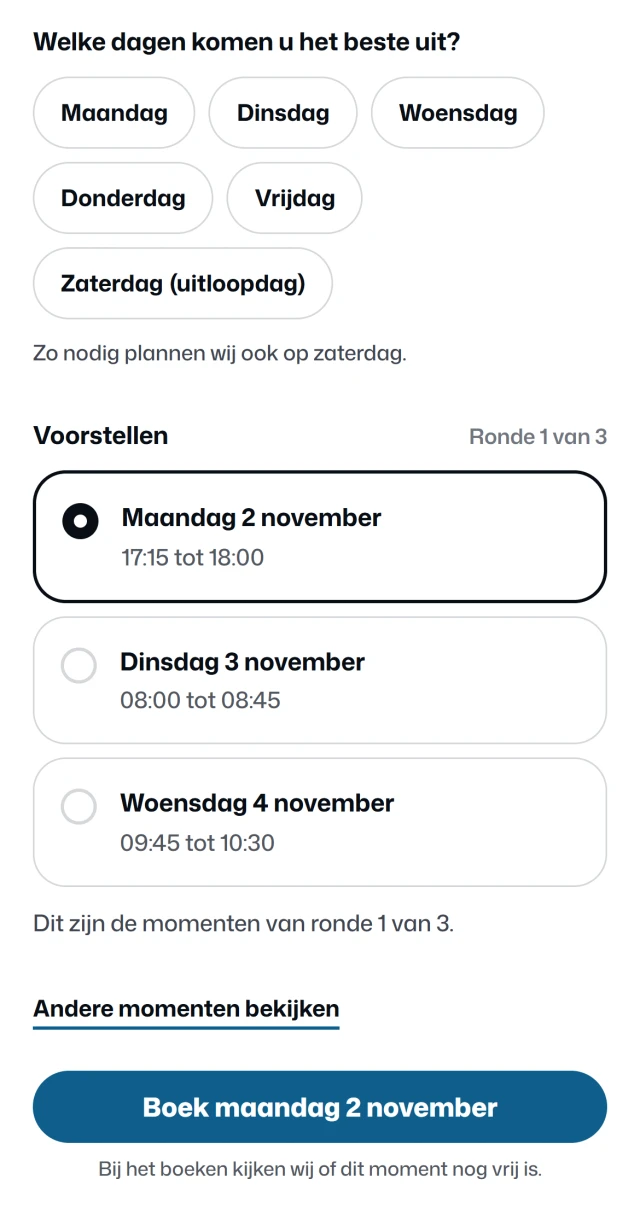
Your customer books their own check, at a time that fits your route. A real screen, in Dutch, from the customer portal of Noordkoel, our demo company, with a made-up customer.

the site survey/

The site survey starts in the meter cupboard.

What is in the meter cupboard and where the battery can go, you want to know before you visit.

  1. your customer/ questionnaire
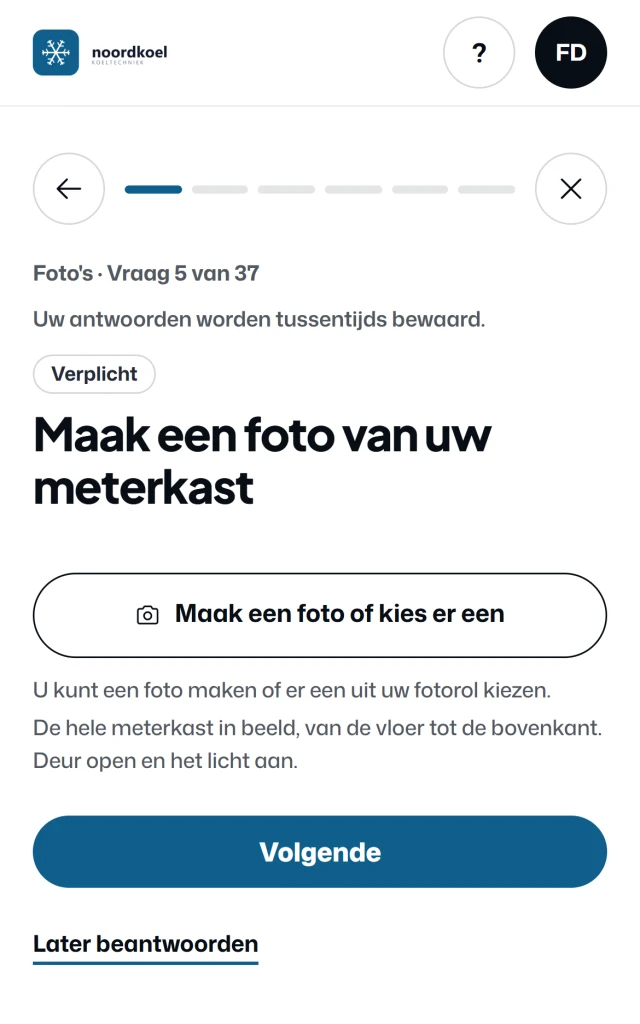
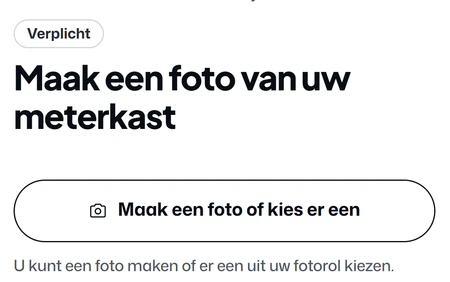
    The questionnaire in the Noordkoel customer portal (Dutch screen): Photos, question 5 of 37, Take a photo of your meter cupboard, with the button Take a photo or choose one.
  2. your adviser/ site survey app
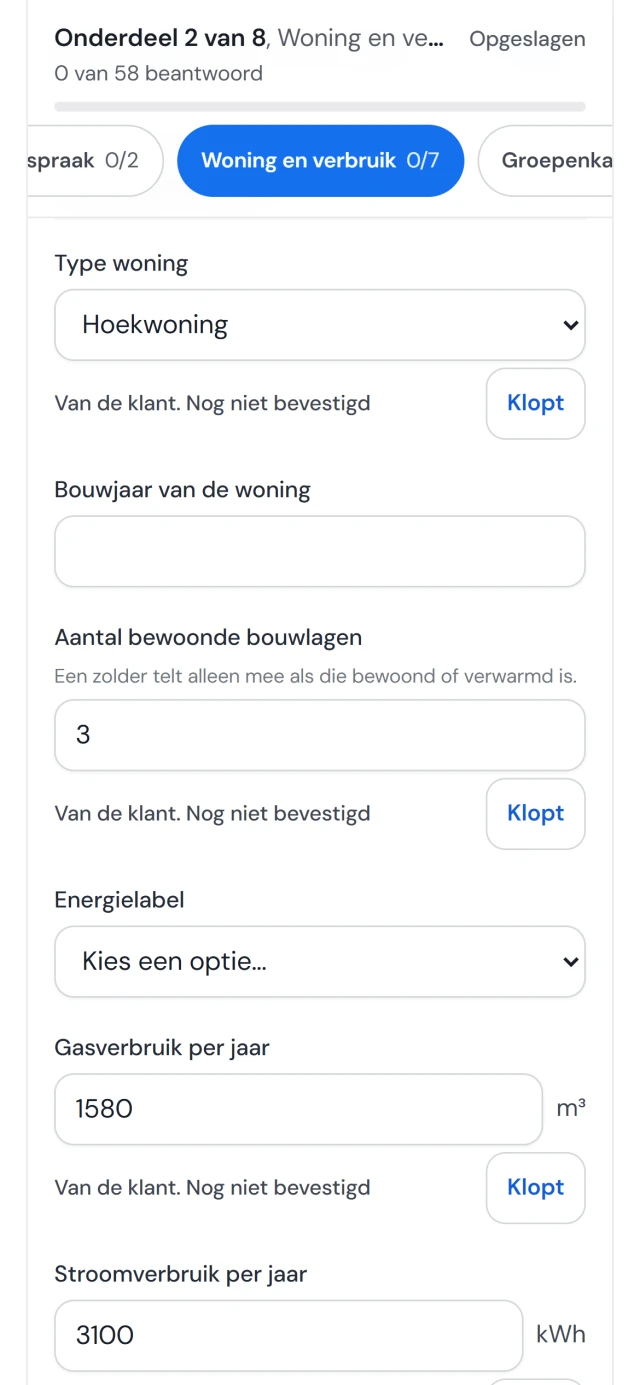
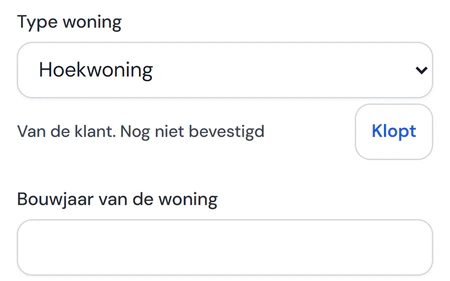
    The site survey form in Fikst on the adviser's phone (Dutch screen): type of home, number of occupied floors and gas consumption are already filled in, each with the line From the customer. Not yet confirmed, and the button Correct.

Real screens, in Dutch, from Noordkoel, our demo company. The example customers are made up.

the register/

Battery and inverter, each with their own details.

  • The battery

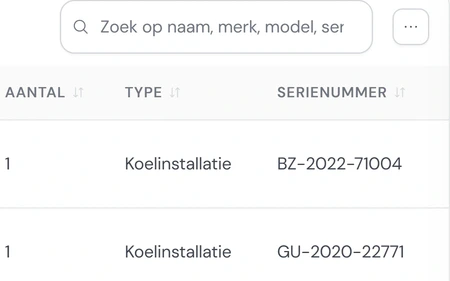
    Brand, type, serial number, installation date, warranty and the power in kW, linked to your customer's address. At every check or fault you see what was done last time.

  • The inverter

    Recorded as a unit of its own next to the battery, because that is the part that breaks, and it has its own warranty.

  • Solar panels and EV charger alongside

    If there are panels on the roof or an EV charger on the wall, they sit at the same address in the same register. One customer, one file.

the registration/

In the Netherlands, every battery from 0.8 kW must be registered.

With the grid operator, via energieleveren.nl. The installer can do that, or the customer themselves. Watch the unit: it is about the power in kilowatts. Many consumer sites write kilowatt hours, and that is wrong.

what they ask of you

  • The address
  • Brand and type of the inverter
  • The date it was put into use
  • The power of the solar panels
  • Power and capacity of the battery
  • The last six characters of the meter number

and what of that is already in the file

The address
is in the customer file
Brand and type of the inverter
a unit of its own in the register
The date it was put into use
installation date on the unit
The power in kW
its own field on the unit
The capacity in kWh
no field of its own yet
The meter number
not ours, the customer looks it up

We do not do the registration itself. Fikst keeps the file those details come from, so nobody has to dig up an inverter on an old receipt.

Drag or scroll to move around

Enlarged Fikst product screen

customer portal/

A yearly check that schedules itself.

For small home batteries, the Dutch Institute for Public Safety (NIPV) advises an inspection by a recognised installer at least once a year, and where possible a maintenance contract. In Fikst the contract prepares the visit by itself, and your customer chooses a time in their portal that fits your route.

How a contract prepares its visits and invoices them, you can read on the page about maintenance contracts.

Scheduling maintenance

your customer/ portal
Scheduling maintenance in the customer portal (Dutch screen): which days suit you best, with Monday to Friday and Saturday as a spare day, three suggestions in round 1 of 3 with Monday 2 November from 17:15 to 18:00 selected, and the button to book Monday 2 November.

Your customer

Your customer says which days suit them, and whether they prefer mornings or afternoons. The only days on offer are the days you drive in their area.

On those days, Fikst looks for times with as little extra driving as possible next to the jobs already planned. Your customer picks one. None of them suit? Then they ask for a new round.

At your end, in Fikst

When they book, Fikst checks once more that the time is still free. The visit then sits on your planning board as a work order, and you get a notification. No more phoning to fix a date.

You set the days and the areas in which you plan maintenance yourself. It works for customers with a maintenance contract, and for a visit you have already prepared.

The customer portal is included in your subscription. You also pay nothing per customer who logs in. Your customer can do more there, from requesting a maintenance contract to the questionnaire for the site survey.

How the customer portal works

Real screens (in Dutch) from the customer portal of Noordkoel, our demo company in refrigeration, with a made-up customer. You choose per feature what your customer can do.

from quote to invoice/

Quote, work order and invoice in one system.

  • The quote

    You send a web quote with variants, for example two battery sizes, in your own branding. Your customer chooses and signs digitally.

  • The installation

    You schedule the job on the planning board. Your technician sees it in the work order app, records the handover with photos and has your customer sign.

  • The invoice

    You create the invoice from the completed work order, with a deposit or instalments if you want.

the limits/

What Fikst does not do here yet.

No payback calculation
Fikst does not calculate what a battery earns your customer, and gives no advice on a dynamic contract or an energy management system.
No subsidy calculation
There is no Dutch ISDE subsidy for a home battery, so Fikst has no calculation module for it either.
The capacity in kWh has no field of its own yet
A battery carries brand, type, serial number, warranty and the power in kW, like any other unit. You put the capacity in kilowatt hours in the note on the unit.

ai features/

Dictate the site survey and let Fikst read photos.

Two AI features for the site survey. Fikst prepares a suggestion and you check it.

  • Dictate a site survey

    you switch it on

    You walk through the house and say what you see. Fikst then fills in the site survey form and you check the answers. If Fikst is unsure about something, that is at the top.

    See what it looks like
  • Read photos

    you switch it on

    Fikst looks at a photo of, for example, the meter cupboard and suggests values from a fixed list, each with how certain it is. In the site survey app it works on its own; on the customer questionnaire it is part of the customer portal.

    See what it looks like

You approve it. Nothing goes into Fikst until you accept it. AI is included and is not expensive: the features use credit, and every company starts with 5,000 free credits. Which actions you can take depends on your access and permissions.

Already working with your own AI, such as Claude? See what you can ask through the MCP connection.

our first customer/

Fully live within two months.

At Elite Klimaat Groep in Hilversum, Fikst runs in production every day, with invoicing, purchasing and the bank in it. Six separate packages were dropped.

packages dropped
6
what they cost per year
€14,880
Fikst per year, according to the pricing page
€3,600
people, 6 of them in the office
22

Amounts excluding VAT. What they pay as launching partner, we do not disclose. Two months was their lead time. How long it takes for you depends on your team and your data.

how we work/

The agreements, in advance and on paper.

What you want to know before you move your whole company to another system. It is also in the terms.

  • Cancel monthly

    You cancel at the end of the month. The first month after go-live is free and without a contract; after that you decide whether to continue.

  • Your data stays yours

    If you cancel, you get all your data in a usable, machine-readable format.

  • Everything is in the price

    No add-ons. New parts are added without you paying more within your subscription.

  • Your technicians pay nothing

    You pay per office user. Anyone who only works in the field does not count, however many technicians you have.

  • You know the implementation in advance

    The implementation is a one-off cost, at a fixed price we agree with you in advance. It depends on the size of your team and what needs to be moved across. Going live usually takes one or two months.

  • You talk to the builder

    We build the software and implement it ourselves, without an implementation partner in between. For support you get the person who built it on the line.

Work out what it costs for your team or read how switching works. Ask for an estimate for the implementation.

Questions we often get.

All frequently asked questions
Does a home battery have to be registered?

In the Netherlands, yes. A battery from 0.8 kW is registered with the grid operator, via energieleveren.nl. The installer can do that, or the customer themselves. Fikst keeps the details needed for it; Fikst does not do the registration itself.

What changes when Dutch net metering ends?

On 1 January 2027 the Dutch net metering scheme (the salderingsregeling) ends. Anyone who feeds electricity back after that gets a feed-in compensation from their supplier, until 2030 at least half the bare supply tariff. Fikst does not calculate what that earns your customer.

How often should a home battery be checked?

For small home batteries, the Dutch Institute for Public Safety (NIPV) advises an inspection by a recognised installer at least once a year, and where possible a maintenance contract. With a maintenance contract in Fikst that check is prepared by itself, and your customer chooses the time in their portal.

How maintenance contracts work
We do solar panels and air conditioning. Will that become a mess?

No. Everything sits with the same customer and the same address, with its own work order and checklist for each type of work. In the register you see all units at an address one below the other, and you have one planning board.

Is Fikst also suitable for a sole trader or a small team?

Yes. You get the same system as a large company, without add-ons. You pay €50 per office user per month, excluding VAT, and your technicians do not count. If you only work with quotes and invoices, you need less than Fikst. If you also schedule technicians, do maintenance or work with F-gases, you have all of that in one system.

Work out an estimate for your team
What does Fikst cost?

€50 per office user per month. Technicians pay nothing. With five people in the office you come to about €250 a month, excluding VAT. The implementation is a one-off cost, at a fixed price we agree with you in advance. It depends on the size of your team and what needs to be moved across. Ask for an estimate.

Work out an estimate for your team
Are we tied to anything?

Fikst can be cancelled monthly. Your data stays yours, and when you leave you take everything with you in a usable format. Switching does take time: a system your whole company works in is not something you leave in an afternoon.

sources/

Where the Dutch rules come from.

Read on 21 October 2026. This is an explanation, not legal advice.

See how this works for your battery work?

In a 30-minute introductory call we look at how you work and show you Fikst live. With five people in the office you pay €250 a month, and your technicians cost nothing.